




























Views
Downloads
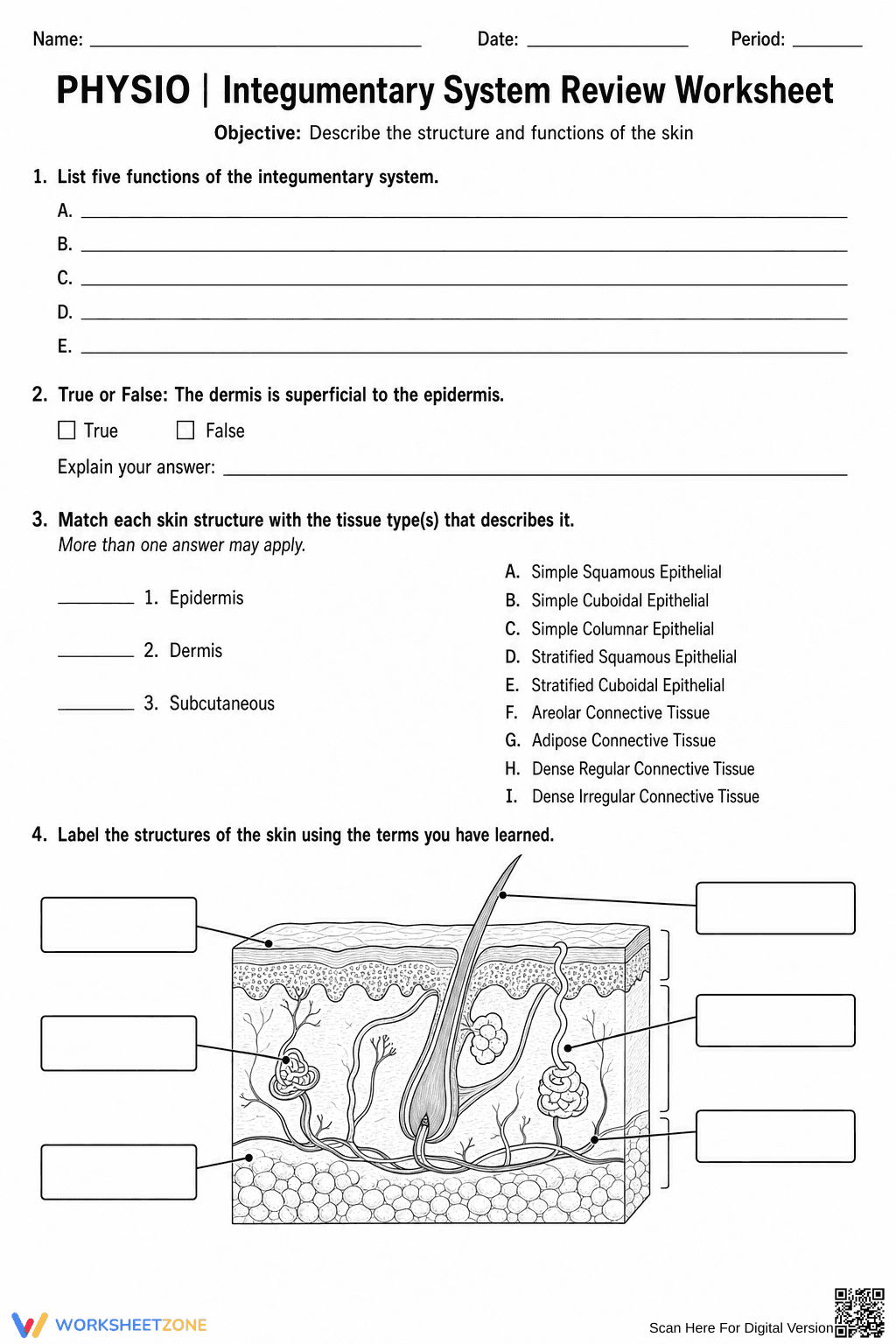
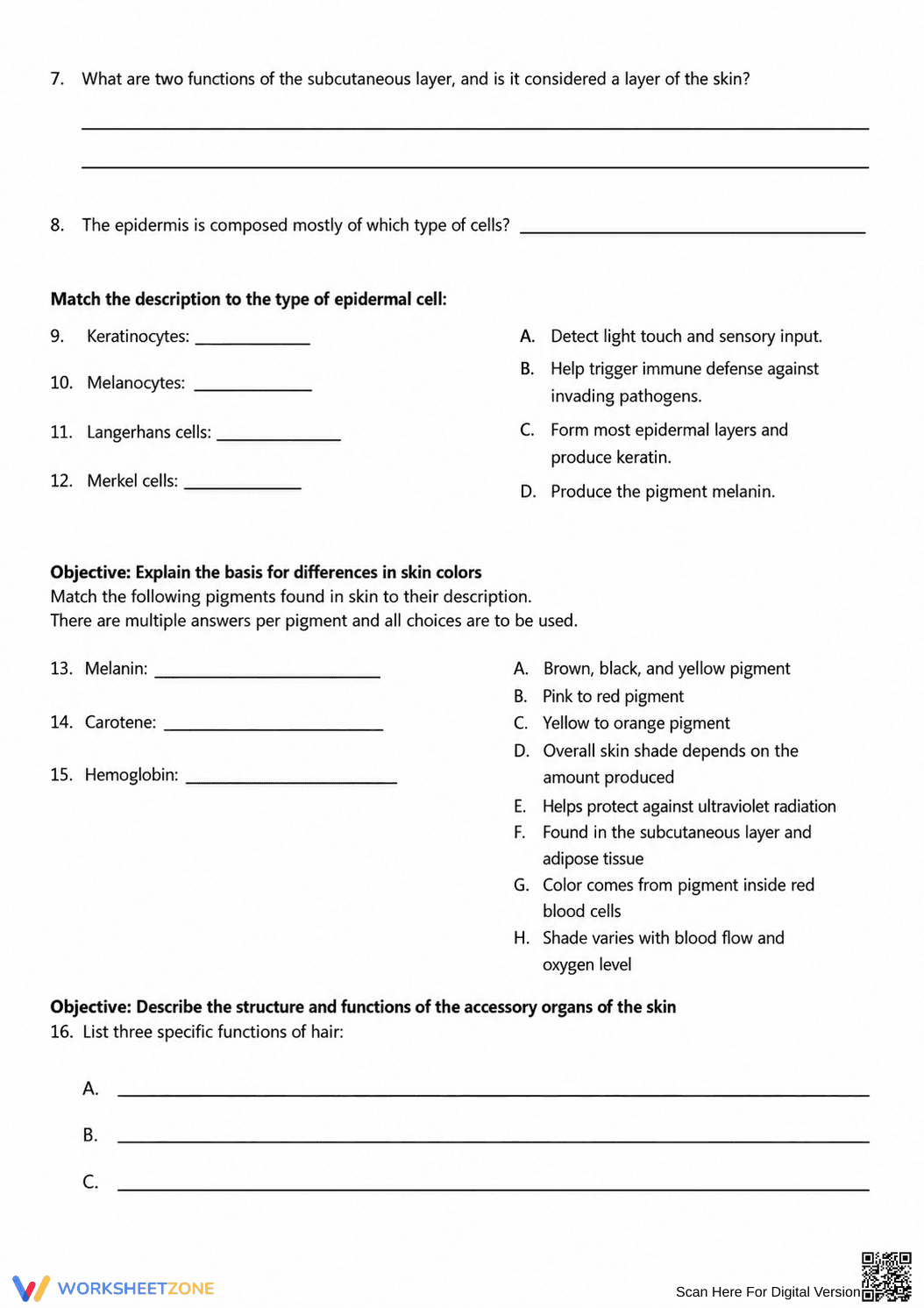
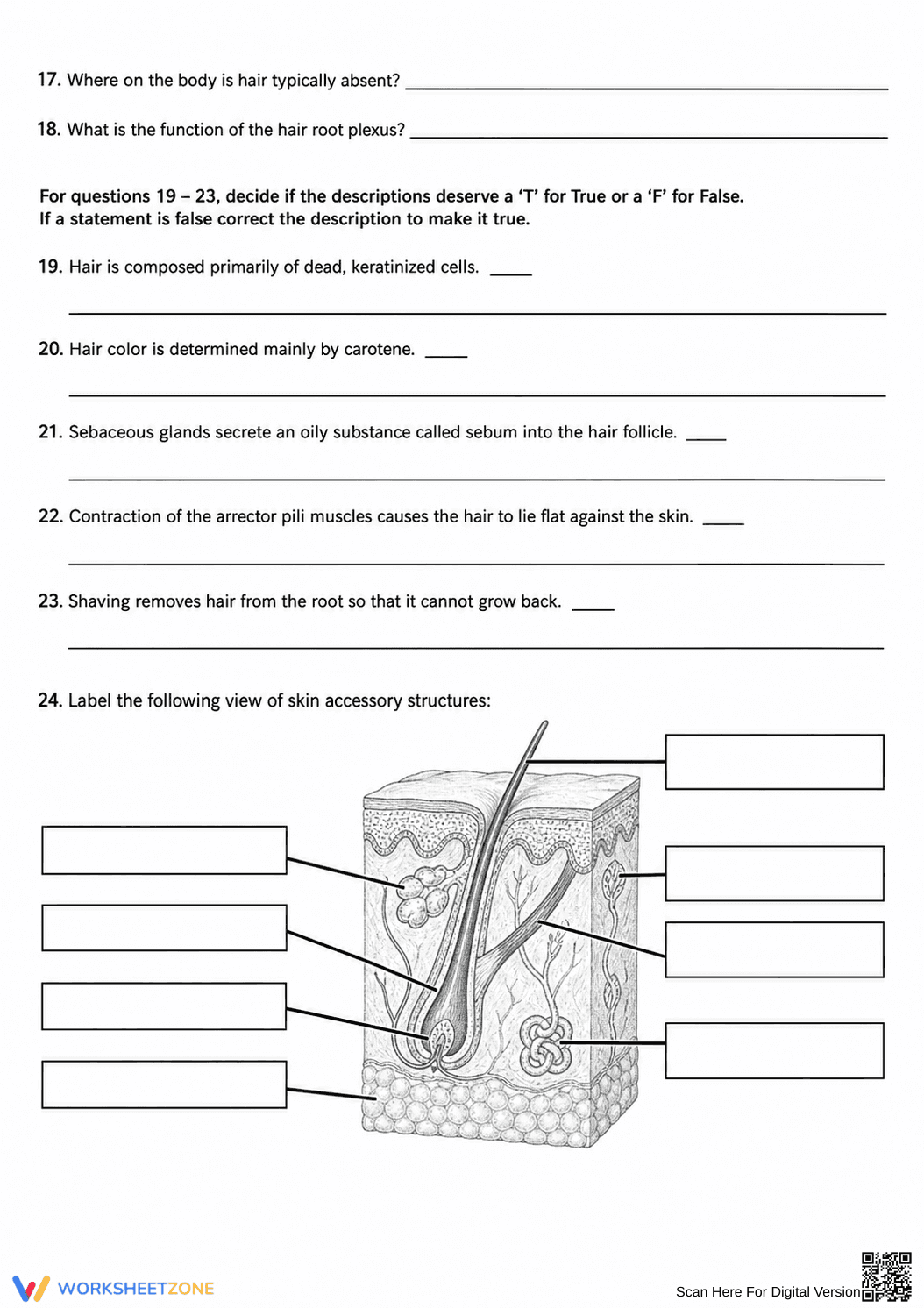
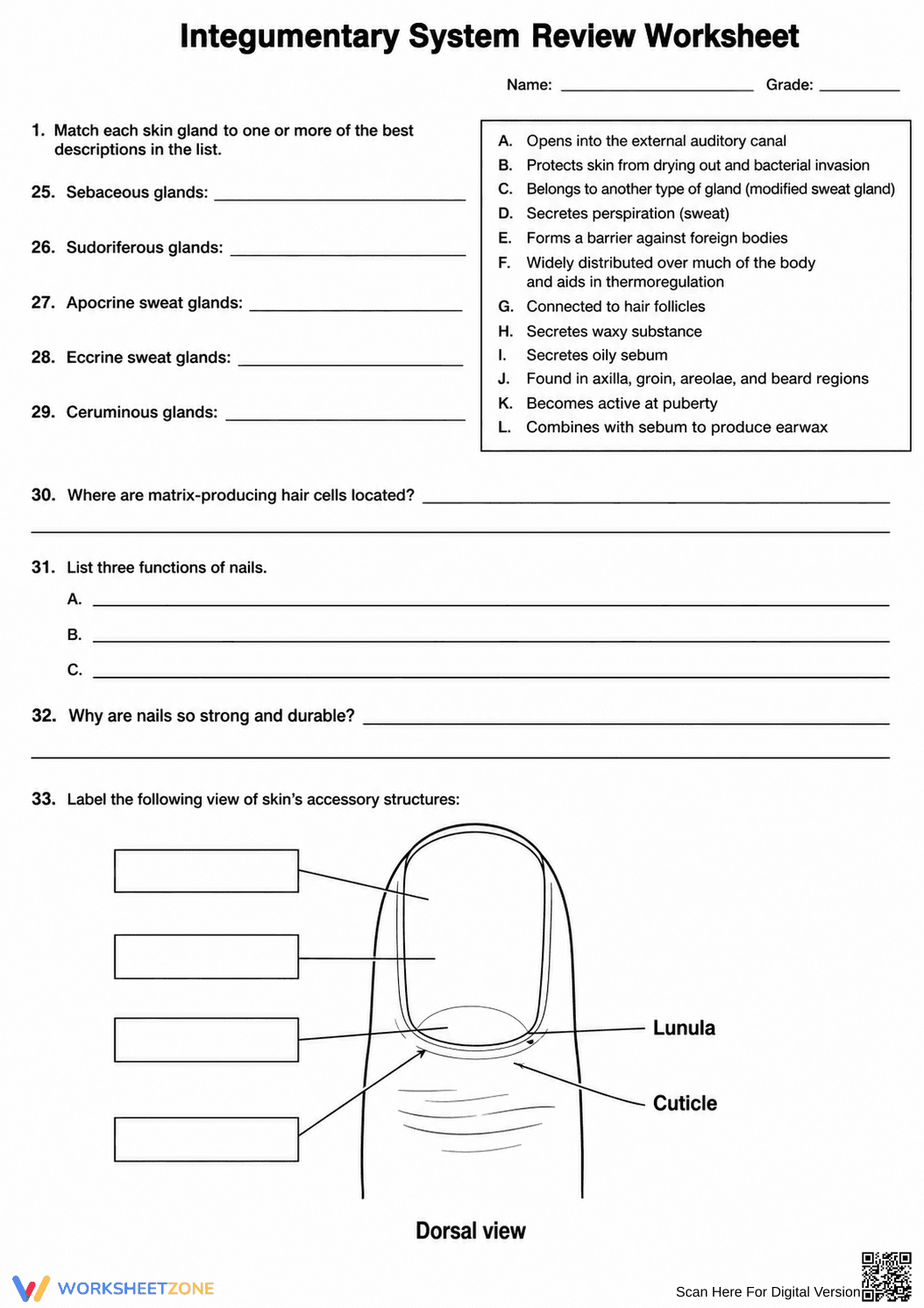

Essential Integumentary System Review | Grade 9 Biology

Paste this activity's link or code into your existing LMS (Google Classroom, Canvas, Teams, Schoology, Moodle, etc.).
Students can open and work on the activity right away, with no student login required.
You'll still be able to track student progress and results from your teacher account.
This comprehensive biology worksheet provides a thorough examination of the anatomy and physiology of the human skin. Students will master the integumentary system by identifying tissue types, labeling complex diagrams, and explaining physiological functions. It ensures students can articulate how the skin maintains homeostasis and protects the body from external environmental stressors.
At a Glance
- Grade: 9 · Subject: Biology
- Standard:
HS-LS1-2— Develop and use a model to illustrate the hierarchical organization of interacting systems- Skill Focus: Integumentary system anatomy
- Format: 4 pages · 33 problems · Answer key included · PDF
- Best For: Unit review or exam preparation
- Time: 45–60 minutes
What's Inside
This 4-page PDF contains 33 structured tasks, including matching exercises for tissue types and epidermal cells, true/false conceptual checks, and three detailed anatomical diagrams for labeling. The diagrams cover the skin cross-section, hair follicle, and nail structure. It features a clear objective-based layout that guides students through functions, layers, pigments, and accessory organs using a professional medical-illustration style.
Zero-Prep Workflow
- Print: Select the 4-page PDF and print enough copies for your class in under 30 seconds.
- Distribute: Hand out the worksheets as a summative review or a high-quality sub-plan activity.
- Review: Use the included answer key to facilitate a whole-class review or peer-grading session in 10 minutes.
Total teacher preparation time is under 2 minutes, making it an ideal resource for busy science departments.
Standards Alignment
This resource aligns with HS-LS1-2: "Develop and use a model to illustrate the hierarchical organization of interacting systems that provide specific functions within multicellular organisms." It specifically addresses the interaction between epithelial, connective, and nervous tissues within the skin. Both standard codes can be copied directly into lesson plans, IEP goals, or district curriculum mapping tools.
How to Use It
Use this as a summative assessment after completing the human body systems unit to gauge student mastery of tissue-level organization. Alternatively, assign it as a structured study guide before a major physiology exam. During the activity, circulate to observe if students can correctly distinguish between the dermis and epidermis tissue compositions. Completion typically ranges from 45 to 60 minutes depending on prior knowledge.
Who It's For
This worksheet is designed for Grade 9 Biology students or advanced middle schoolers studying life science. It is particularly effective for visual learners who benefit from diagram labeling and for students requiring structured matching tasks to reinforce vocabulary. Pair this with a skin model or a histology slide lab for a complete instructional cycle.
According to the RAND AIRS 2024 report on secondary science instruction, structured retrieval practice through multi-modal tasks—such as the matching and labeling found in this HS-LS1-2 aligned resource—significantly improves long-term retention of complex anatomical terminology. By requiring students to map specific tissue types like stratified squamous epithelium to physiological structures, the worksheet moves beyond rote memorization toward conceptual understanding of hierarchical organization. Research from Fisher & Frey (2014) supports the use of such comprehensive review tools as a critical component of the gradual release of responsibility, allowing students to demonstrate independent mastery of the integumentary system's functions and accessory structures. This 4-page resource provides the necessary scaffolding to bridge the gap between initial instruction and high-stakes assessment, ensuring students can accurately describe the skin's role in maintaining homeostasis.


